An error occurred. Details Hide
You have unsaved pages. Restore Cancel

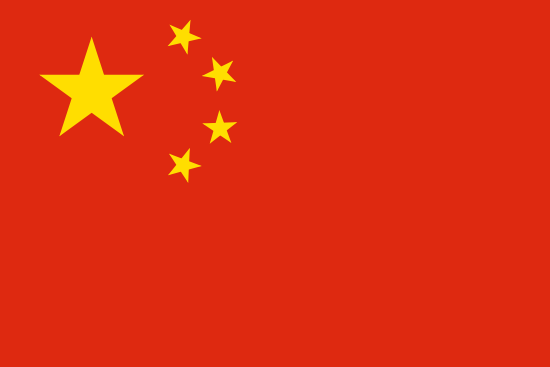
China

  • President:Xi Jinping
  • Premier:Li Keqiang
  • Capital city:Beijing
  • Languages:Standard Chinese or Mandarin (official; Putonghua, based on the Beijing dialect), Yue (Cantonese), Wu (Shanghainese), Minbei (Fuzhou), Minnan (Hokkien-Taiwanese), Xiang, Gan, Hakka dialects, minority languages (see Ethnic groups entry) note: Zhuang is official in Guangxi Zhuang, Yue is official in Guangdong, Mongolian is official in Nei Mongol, Uighur is official in Xinjiang Uygur, Kyrgyz is official in Xinjiang Uygur, and Tibetan is official in Xizang (Tibet)
  • Government
  • National statistics office
  • Population, persons:1,386,395,000 (2017)
  • Area, sq km:9,388,211 (2017)
  • GDP per capita, US$:8,827 (2017)
  • GDP, billion current US$:12,237.7 (2017)
  • GINI index:42.2 (2012)
  • Ease of Doing Business rank:78 (2017)

All datasets: E F H I M P W
  • E
    • February 2018
      Source: International Labour Organization
      Uploaded by: Knoema
      Accessed On: 31 August, 2018
      Select Dataset
      Employed migrants refer to the number of persons who changed their country of usual residence and were also employed during a specified brief period. Data are disaggregated by country of origin. A person's country of origin is that from which the person originates, i.e. the country of his or her citizenship (or, in the case of stateless persons, the country of usual residence).
    • July 2018
      Source: International Labour Organization
      Uploaded by: Knoema
      Accessed On: 19 July, 2018
      Select Dataset
  • F
    • June 2014
      Source: Organisation for Economic Co-operation and Development
      Uploaded by: Balaji S
      Accessed On: 06 June, 2014
      Select Dataset
      OECD Factbook provides a global overview of today’s major economic, social and environmental indicators which cover a wide range of areas: agriculture, economic production, education, energy, environment, foreign aid, health, industry, information and communications, international trade, labour force, population, taxation, public expenditure and R&D. More countries than ever are covered in greater detail, enabling direct comparisons for many indicators between OECD Members and Brazil, China, India, Indonesia, Russian Federation and South Africa.
  • H
    • September 2018
      Source: World Bank
      Uploaded by: Knoema
      Accessed On: 03 October, 2018
      Select Dataset
      Health Nutrition and Population Statistics database provides key health, nutrition and population statistics gathered from a variety of international and national sources. Themes include global surgery, health financing, HIV/AIDS, immunization, infectious diseases, medical resources and usage, noncommunicable diseases, nutrition, population dynamics, reproductive health, universal health coverage, and water and sanitation.
    • September 2014
      Source: World Bank
      Uploaded by: Knoema
      Accessed On: 22 September, 2014
      Select Dataset
      The World Bank Health Nutrition and Population Statistics Provides key health, nutrition and population statistics gathered from a variety of international sources. Themes include population dynamics, nutrition, reproductive health, health financing, medical resources and usage, immunization, infectious diseases, HIV/AIDS, DALY, population projections and lending. HNPStats also includes health, nutrition and population statistics by wealth quintiles.
    • August 2018
      Source: United Nations Development Programme
      Uploaded by: Knoema
      Accessed On: 20 December, 2018
      Select Dataset
      The Human Development Index (HDI) is a summary measure of achievements in three key dimensions of human development: a long and healthy life, access to knowledge and a decent standard of living. The HDI is the geometric mean of normalized indices for each of the the three dimensions.
  • I
    • July 2016
      Source: United Nations Industrial Development Organization
      Uploaded by: Knoema
      Accessed On: 22 August, 2016
      Select Dataset
      The UNIDO Industrial Statistics Database at the 4-digit level of ISIC (INDSTAT4) contains highly disaggregated data on the manufacturing sector for the period 1990 onwards. Comparability of data over time and across the countries has been the main priority of developing and updating this database. INDSTAT4 offers a unique possibility of in-depth analysis of the structural transformation of economies over time. The database contains seven principle indicators of industrial statistics. The data are arranged at the 3- and 4-digit level of the International Standard Industrial Classification of All Economic Activities (ISIC) Revision 3 and 4 pertaining to the manufacturing, which comprises more than 150 manufacturing sectors and sub-sectors.   Note: Value added and Employnment indicators were extracted from   http://www.unido.org/Data1/IndStatBrief/E_Employement_Wages_and_Employment_Share_per_Sector.cfm?print=no&ttype=C4&Country=ALB&sortBy=&sortDir=&Group=
    • February 2018
      Source: International Labour Organization
      Uploaded by: Knoema
      Accessed On: 31 August, 2018
      Select Dataset
      Inflow of migrants refer to the number of immigrants who changed their country of usual residence during the reference period. A person's country of usual residence is the country in which the person has a place to live where he or she normally spends the daily period of rest. Temporary travel abroad for purposes of recreation, holiday, business, medical treatment or religious pilgrimage does not entail a change in the country of usual residence. Data are disaggregated by sex and country of origin. A person's country of origin is that from which the person originates, i.e. the country of his or her citizenship (or, in the case of stateless persons, the country of usual residence).
  • M
    • February 2018
      Source: International Labour Organization
      Uploaded by: Knoema
      Accessed On: 31 August, 2018
      Select Dataset
      Migrants comprise individuals who changed their country of usual residence. A person's country of usual residence is the country in which the person has a place to live where he or she normally spends the daily period of rest. Temporary travel abroad for purposes of recreation, holiday, business, medical treatment or religious pilgrimage does not entail a change in the country of usual residence. Data are disaggregated by country of origin. A person's country of origin is that from which the person originates, i.e. the country of his or her citizenship (or, in the case of stateless persons, the country of usual residence).
  • P
    • October 2017
      Source: University of Groningen
      Uploaded by: Balaji S
      Accessed On: 05 October, 2018
      Select Dataset
      PWT version 9.0 is a database with information on relative levels of income, output, inputs and productivity, covering 182 countries between 1950 and 2014.
  • W

Our Privacy Statement & Cookie Policy

Our website uses cookies to improve your online experience. They were placed on your computer when you launched this website. You can change your personal cookie settings through your internet browser settings.

Privacy Policy