An error occurred. Details Hide
You have unsaved pages. Restore Cancel

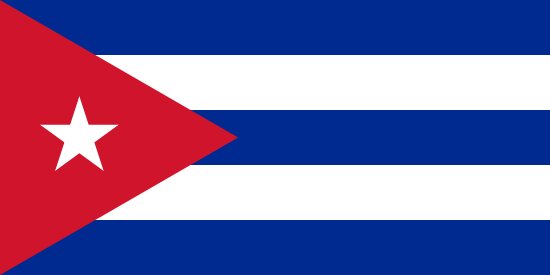
Cuba

  • President:Miguel Díaz-Canel
  • Vice President:Salvador Valdés Mesa
  • Capital city:Havana
  • Languages:Spanish (official)
  • Government:No data
  • National statistics office
  • Population, persons:11,484,636 (2017)
  • Area, sq km:104,020 (2017)
  • GDP per capita, US$:7,602 (2015)
  • GDP, billion current US$:87.1 (2015)
  • GINI index:No data
  • Ease of Doing Business rank:No data
All datasets: E G H M W
  • E
    • September 2014
      Source: World Bank
      Uploaded by: Shakthi Krishnan
      Accessed On: 05 January, 2015
      Select Dataset
      WBEducation Statistics provides data on over 1,000 internationally comparable indicators for access, progression, completion, learning outcomes, literacy, teachers, expenditure, and background indicators. The indicators cover the educational cycle from pre-primary to tertiary education.
  • G
    • July 2018
      Source: World Bank
      Uploaded by: Knoema
      Accessed On: 17 August, 2018
      Select Dataset
      Gender Stats is a one stop source of information on gender at the country level. A compilation of data on key gender topics from national statistics agencies, United Nations databases, and World Bank-conducted or funded surveys. A work-in-progress because the database is continuously updated as new information becomes available.
  • H
    • September 2018
      Source: World Bank
      Uploaded by: Knoema
      Accessed On: 03 October, 2018
      Select Dataset
      Health Nutrition and Population Statistics database provides key health, nutrition and population statistics gathered from a variety of international and national sources. Themes include global surgery, health financing, HIV/AIDS, immunization, infectious diseases, medical resources and usage, noncommunicable diseases, nutrition, population dynamics, reproductive health, universal health coverage, and water and sanitation.
    • September 2014
      Source: World Bank
      Uploaded by: Knoema
      Accessed On: 22 September, 2014
      Select Dataset
      The World Bank Health Nutrition and Population Statistics Provides key health, nutrition and population statistics gathered from a variety of international sources. Themes include population dynamics, nutrition, reproductive health, health financing, medical resources and usage, immunization, infectious diseases, HIV/AIDS, DALY, population projections and lending. HNPStats also includes health, nutrition and population statistics by wealth quintiles.
    • August 2018
      Source: United Nations Development Programme
      Uploaded by: Knoema
      Accessed On: 20 December, 2018
      Select Dataset
      The Human Development Index (HDI) is a summary measure of achievements in three key dimensions of human development: a long and healthy life, access to knowledge and a decent standard of living. The HDI is the geometric mean of normalized indices for each of the the three dimensions.
  • M
    • October 2016
      Source: World Bank
      Uploaded by: Knoema
      Accessed On: 17 November, 2016
      Select Dataset
      Relevant indicators drawn from the World Development Indicators, reorganized according to the goals and targets of the Millennium Development Goals (MDGs). The MDGs focus the efforts of the world community on achieving significant, measurable improvements in people's lives by the year 2015: they establish targets and yardsticks for measuring development results. Gender Parity Index (GPI)= Value of indicator for Girls/ Value of indicator for Boys. For e.g GPI=School enrolment for Girls/School enrolment for Boys. A value of less than one indicates differences in favor of boys, whereas a value near one (1) indicates that parity has been more or less achieved. The greater the deviation from 1 greater the disparity is.  
  • W
    • February 2017
      Source: World Bank
      Uploaded by: Knoema
      Accessed On: 14 March, 2017
      Select Dataset
      Education Statistics provides data on over 1,000 internationally comparable indicators for access, progression, completion, learning outcomes, literacy, teachers, expenditure, and background indicators. The indicators cover the educational cycle from pre-primary to tertiary education.

Our Privacy Statement & Cookie Policy

Our website uses cookies to improve your online experience. They were placed on your computer when you launched this website. You can change your personal cookie settings through your internet browser settings.

Privacy Policy