An error occurred. Details Hide
You have unsaved pages. Restore Cancel

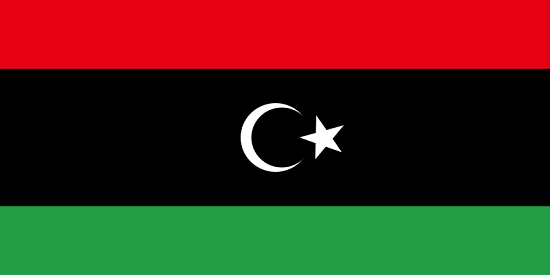
Libya

  • Chairman of the Presidential Council:Fayez al-Sarraj
  • Prime Minister:Fayez al-Sarraj
  • Capital city:Tripoli (Tarabulus)
  • Languages:Arabic (official), Italian, English (all widely understood in the major cities); Berber (Nafusi, Ghadamis, Suknah, Awjilah, Tamasheq)
  • Government
  • National statistics office
  • Population, persons:6,374,616 (2017)
  • Area, sq km:1,759,540 (2017)
  • GDP per capita, US$:7,998 (2017)
  • GDP, billion current US$:51.0 (2017)
  • GINI index:No data
  • Ease of Doing Business rank:185 (2017)

All datasets: A N Q S T U W
  • A
    • October 2013
      Source: Mo Ibrahim Foundation
      Uploaded by: Knoema
      Accessed On: 24 October, 2013
      Select Dataset
      Ibrahim Index of African Governance (IIAG) - is comprehensive statistical tool assessing African countries' performance in provision of public goods and services. Consisting of 133 variables derived from 32 independent sources IIAG measures governance performance across 4 pillars: Safety and Rule of Law, Participation and Human Rights, Sustainable Economic Opportunity and Human Development. All-embracing nature of the index makes it fairly the best instrument for setting long-term political, social and economical goals concerning the African region.
  • N
    • December 2010
      Source: Friedrich Schneider
      Uploaded by: Knoema
      Accessed On: 13 July, 2012
      Select Dataset
      Source: Schneider, Friedrich , Buehn, Andreas and Montenegro, Claudio E.(2010) 'New Estimates for the Shadow Economies all over the World', International Economic Journal, 24: 4, 443-461. This dataset presents estimations of the shadow economies for 162 countries, including developing, Eastern European, Central Asian, and high income OECD countries over 1999 to 2006/2007.
  • Q
    • January 2018
      Source: Quality of Government Institute
      Uploaded by: Knoema
      Accessed On: 16 February, 2018
      Select Dataset
      Data cited at: Teorell, Jan, Stefan Dahlberg, Sören Holmberg, Bo Rothstein, Natalia Alvarado Pachon & Richard Svensson. 2018. The Quality of Government Standard Dataset, version Jan18. University of Gothenburg: The Quality of Government Institute, http://www.qog.pol.gu.se doi:10.18157/QoGStdJan18   In the QoG Standard CS dataset, data from and around 2014 is included. Data from 2014 is prioritized, however, if no data is available for a country for 2014, data for 2015 is included. If no data exists for 2015, data for 2013 is included, and so on up to a maximum of +/- 3 years. In the QoG Standard TS dataset, data from 1946 to 2017 is included and the unit of analysis is country-year (e.g. Sweden-1946, Sweden-1947 and so on).   Citation: Teorell, Jan, Stefan Dahlberg, Sören Holmberg, Bo Rothstein, Natalia Alvarado Pachon & Richard Svensson. 2018. The Quality of Government Standard Dataset, version Jan18. University of Gothenburg: The Quality of Government Institute, http://www.qog.pol.gu.se doi:10.18157/QoGStdJan18
  • S
  • T
    • December 2016
      Source: Walk Free Foundation
      Uploaded by: Knoema
      Accessed On: 09 January, 2017
      Select Dataset
      This is the second edition of the Global Slavery Index, the flagship report of the Walk Free Foundation. The Global Slavery Index estimates the number of people in modern slavery in 167 countries. It is a tool for citizens, non government organisations, businesses and public officials to understand the size of the problem, existing responses and contributing factors, so they can build sound policies that will end modern slavery. The Global Slavery Index answers the following questions: What is the estimated prevalence of modern slavery country by country, and what is the absolute number by population? How are governments tackling modern slavery? What factors explain or predict the prevalence of modern slavery?
  • U
    • October 2016
      Source: United Nations Public Administration Country Studies
      Uploaded by: Knoema
      Accessed On: 17 October, 2016
      Select Dataset
      1. The EGDI is based on a comprehensive Survey of the online presence of all 193 United Nations Member States, which assesses national websites and how e-government policies and strategies are applied in general and in specific sectors for delivery of essential services. The assessment rates the e-government performance of countries relative to one another as opposed to being an absolute measurement. The results are tabulated and combined with a set of indicators embodying a country’s capacity to participate in the information society, without which e-government development efforts are of limited immediate use. Although the basic model has remained consistent, the precise meaning of these values varies from one edition of the Survey to the next as understanding of the potential of e-government changes and the underlying technology evolves. This is an important distinction because it also implies that it is a comparative framework that seeks to encompass various approaches that may evolve over time instead of advocating a linear path with an absolute goal. 2. E-Government Development Index-EGDI Very High-EGDI (Greater than 0.75) High-EGDI (Between 0.50 and 0.75) Middle-EGDI (Between 0.25 and 0.50) Low-EGDI (Less than 0.25)
  • W
    • May 2012
      Source: International Labour Organization
      Uploaded by: Balaji S
      Select Dataset
      Wages and Employment
    • April 2016
      Source: Reporters Without Borders
      Uploaded by: Shakthi Krishnan
      Accessed On: 06 May, 2016
      Select Dataset
      The press freedom index that Reporters Without Borders publishes every year measures the level of freedom of information in nearly 180 countries. It reflects the degree of freedom that journalists, news organizations and netizens enjoy in each country, and the efforts made by the authorities to respect and ensure respect for this freedom. It is based partly on a questionnaire that is sent to our partner organizations (18 freedom of expression NGOs located in all five continents), to our network of 150 correspondents, and to journalists, researchers, jurists and human rights activists. The 179 countries ranked in this year’s index are those for which Reporters Without Borders received completed questionnaires from various sources. Some countries were not included because of a lack of reliable, confirmed data. A score and a position are assigned to each country in the final ranking. They are complementary indicators that together assess the state of press freedom. In order to make the index more informative and make it easier to compare different years, scores will henceforth range from 0 to 100, with 0 being the best possible score and 100 the worst. The index reflects the situation during a specific period. This year’s index is based solely on events between the start of December 2012 and the end of November 2013. It does not look at human rights violations in general, just violations of freedom of information. The index should in no way be taken as an indication of the quality of the media in the countries concerned.
    • August 2018
      Source: World Bank
      Uploaded by: Knoema
      Accessed On: 27 September, 2018
      Select Dataset
      The Worldwide Governance Indicators (WGI) project reports aggregate and individual governance indicators for over 200 countries and territories over the period 1996–2017, for six dimensions of governance:Voice and AccountabilityPolitical Stability and Absence of ViolenceGovernment EffectivenessRegulatory QualityRule of LawControl of Corruption The Worldwide Governance Indicators (WGI) are a research dataset summarizing the views on the quality of governance provided by a large number of enterprise, citizen and expert survey respondents in industrial and developing countries. These data are gathered from a number of survey institutes, think tanks, non-governmental organizations, international organizations, and private sector firms. The WGI do not reflect the official views of the World Bank, its Executive Directors, or the countries they represent. The WGI are not used by the World Bank Group to allocate resources. Measure description: Estimate:-Estimate of governance (ranges from approximately -2.5 (weak) to 2.5 (strong) governance performance) Standard error (StdErr):-Standard error reflects variability around the point estimate of governance. Number of sources (NumSrc):-Number of data sources on which estimate is based Rank:-Percentile rank among all countries (ranges from 0 (lowest) to 100 (highest) rank) Lower:-Lower bound of 90% confidence interval for governance, in percentile rank terms Upper:-Upper bound of 90% confidence interval for governance, in percentile rank terms

Our Privacy Statement & Cookie Policy

Our website uses cookies to improve your online experience. They were placed on your computer when you launched this website. You can change your personal cookie settings through your internet browser settings.

Privacy Policy