An error occurred. Details Hide
You have unsaved pages. Restore Cancel

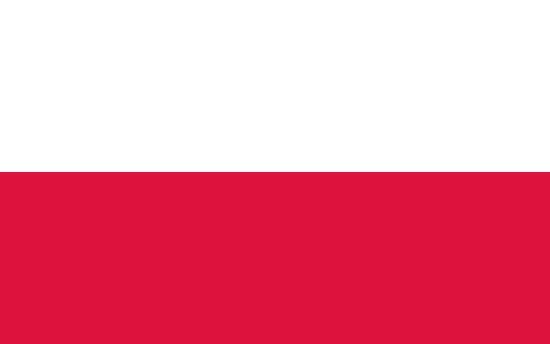
Poland

  • President:Andrzej Duda
  • Prime Minister:Mateusz Morawiecki
  • Capital city:Warsaw
  • Languages:Polish (official) 98.2%, Silesian 1.4%, other 1.1%, unspecified 1.3% note: data represents the language spoken at home; shares sum to more than 100% because some respondents gave more than one answer on the census; Poland ratified the European Charter for Regional or Minority Languages in 2009 recognizing Kashub as a regional language, Czech, Hebrew, Yiddish, Belarusian, Lithuanian, German, Armenian, Russian, Slovak, and Ukrainian as national minority languages, and Karaim, Lemko, Romani (Polska Roma and Bergitka Roma), and Tatar as ethnic minority languages (2011 est.)
  • Government
  • National statistics office
  • Population, persons:37,975,841 (2017)
  • Area, sq km:306,190 (2017)
  • GDP per capita, US$:13,812 (2017)
  • GDP, billion current US$:524.5 (2017)
  • GINI index:31.8 (2015)
  • Ease of Doing Business rank:27 (2017)

All datasets: A F W
  • A
    • June 2017
      Source: International Tropical Timber Organization
      Uploaded by: Pallavi S
      Accessed On: 24 July, 2017
      Select Dataset
      ITTO's Annual Review and Assessment of the World Timber Situation compiles the most up-to-date and reliable international statistics available on global production and trade of timber, with an emphasis on the tropics. It also provides information on trends in forest area, forest management and the economies of ITTO member countries.
  • F
    • December 2014
      Source: Food and Agriculture Organization
      Uploaded by: Pallavi S
      Accessed On: 29 December, 2014
      Select Dataset
      The UN FAO Forestry Statistics contains global compilations of comparable annual statistics on the production and import/export of forest products
  • W
    • August 2018
      Source: World Bank
      Uploaded by: Knoema
      Accessed On: 21 August, 2018
      Select Dataset
      Climate change is expected to hit developing countries the hardest. Its effects—higher temperatures, changes in precipitation patterns, rising sea levels, and more frequent weather-related disasters—pose risks for agriculture, food, and water supplies. At stake are recent gains in the fight against poverty, hunger and disease, and the lives and livelihoods of billions of people in developing countries. Addressing climate change requires unprecedented global cooperation across borders. The World Bank Group is helping support developing countries and contributing to a global solution, while tailoring our approach to the differing needs of developing country partners. Data here cover climate systems, exposure to climate impacts, resilience, greenhouse gas emissions, and energy use. Other indicators relevant to climate change are found under other data pages, particularly Environment, Agriculture & Rural Development, Energy & Mining, Health, Infrastructure, Poverty, and Urban Development.

Our Privacy Statement & Cookie Policy

Our website uses cookies to improve your online experience. They were placed on your computer when you launched this website. You can change your personal cookie settings through your internet browser settings.

Privacy Policy